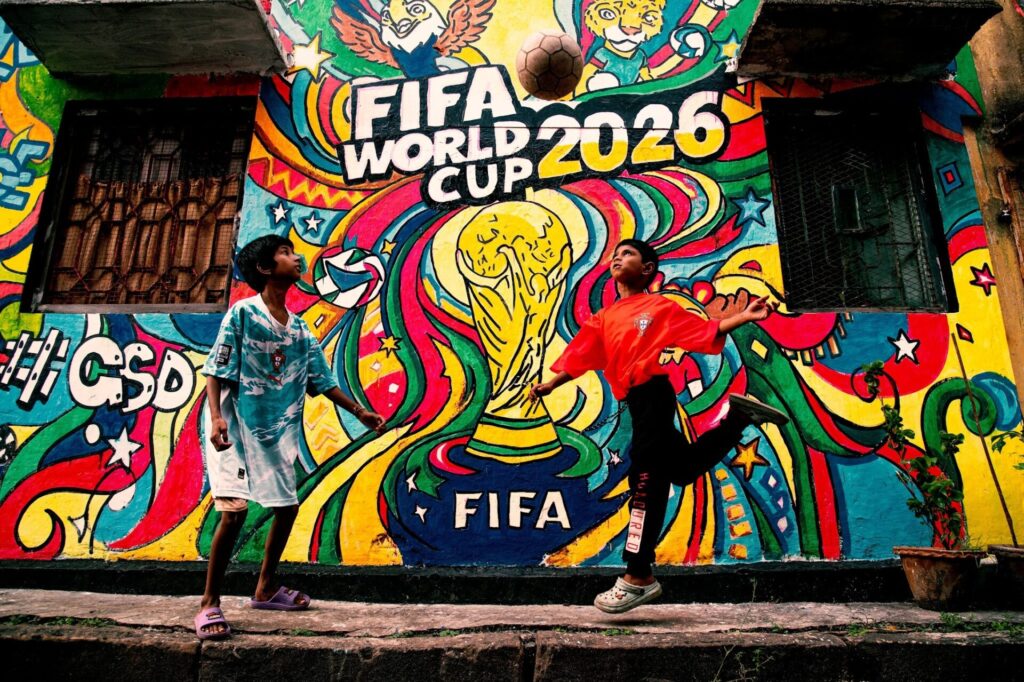
The 2026 World Cup contained more teams and matches than any previous edition. Macquarie analysts forecast that global wagers on the tournament could exceed $50 billion, compared with approximately $35 billion during Qatar 2022, according to Reuters.
That $50 billion remains a forecast rather than a confirmed total. It still indicates the level of activity betting services prepared for across a longer schedule filled with new matchups and rapidly changing live data.
A Bigger World Cup Created More Markets
FIFA expanded the competition from 32 to 48 teams, divided into 12 groups of four. The tournament contained 104 matches, up from 64 in Qatar, which represented a 62.5% increase. The group stage alone grew from 48 to 72 games, while the addition of a round of 32 extended the knockout route. FIFA’s 2026 format added 40 fixtures to the program.
For a registered adult completing a Betway log in, the enlarged tournament meant more fixtures and markets appearing through the same account interface. Behind that page were live feeds, pricing software and security controls that had to work across 40 additional games.
Extra matches also introduced greater uncertainty. Comparisons of the easiest and hardest groups at the 2026 World Cup had to weigh established contenders against debutants and nations that rarely faced one another.
Operators needed to collect team news, performance statistics and market information for 104 separate fixtures. The increase was about volume, not greater certainty over the results.
The expanded schedule tested in-play systems.
Pre-match odds can draw on previous results, expected line-ups and longer-term form. In-play markets work within much shorter timeframes because the relevant details change as the game unfolds.
A goal, penalty, red card, or injury can alter the state of a match immediately. The affected markets may need to be updated or suspended once the incident has been verified. Television and streaming delays add another complication, as viewers can see an event several seconds after it occurs in the stadium.
Public figures do not establish whether in-play wagers dominated activity during the tournament. However, the format placed live systems under sustained pressure for longer, particularly on days when several fixtures were played within a short period.
More Fixtures Changed the Data Picture
Each finalist played eight matches rather than the seven required under the previous format. By the later knockout rounds, analysts had a larger sample from the competition itself and needed to rely less heavily on qualification campaigns, friendlies, or domestic club form.
Possession, shots, expected goals, cards, injuries and playing time can influence how a team is assessed. Confirmed line-ups may shift that assessment shortly before kick-off, while substitutions introduce new variables after play begins.
The longer schedule also changed how recent form was interpreted. A team could improve across the group stage, while fatigue, suspensions and injuries became more relevant as the knockout rounds progressed. Models built before the tournament therefore needed regular revision rather than simple repetition. Even familiar players could take on different roles after tactical changes or altered formations. For live markets, each new event had to be judged against the remaining match time and current score. A late equalizer, for example, changed both the immediate match position and the limited time available for either side to respond before full time.
The expanded field also exposed gaps in the available evidence. Debutants had little World Cup history, while some opponents rarely met in competitive fixtures. A high shot count could not guarantee a goal, just as earlier results could not anticipate every tactical decision, refereeing call, or individual error. Odds represented a probability calculated at a particular moment rather than a guaranteed outcome.
Large Audiences Put Services Under Pressure
Attention became especially concentrated during the knockout rounds. Argentina’s semi-final victory over England averaged 15.06 million viewers on English-language television in the United States and peaked at 22.18 million, according to Reuters. The two semi-finals in 2022 had averaged 6.53 million viewers.
Television audiences are not a measure of betting participation. The figures show how millions of people can focus on the same fixture at once, increasing traffic around kick-off, goals and the closing stages.
Betting services must remain stable during those peaks, but uptime is only one concern. Secure access, accurate account records and recovery procedures must continue working. Spending limits, time reminders and temporary breaks also need to remain available when interest is at its highest.
What the $50 Billion Forecast Really Shows
An increase from $35 billion to more than $50 billion would equal at least 42.9%, although confirmed post-tournament data is needed before it can be called a record. The forecast provides a measure of what the industry expected to handle during the enlarged competition. Forty additional fixtures required extra pricing, continuous data updates and longer periods of concentrated traffic. For sports betting services, the defining feature of the 2026 World Cup was not simply its potential wagering total, but the workload created by its expanded format.