beginner skiing tips thesportshouse helps new skiers start safely and enjoy the mountain. The guide lists clear gear choices, basic skills, simple drills, and safety rules. It gives step-by-step advice for a first day on snow. The guide focuses on small wins that build confidence. Readers will learn what to buy, what to practice, and how to progress.
Key Takeaways
- Beginner skiing tips from thesportshouse emphasize starting with proper gear rental to ensure comfort and control on the slopes.
- Focus on mastering basic skills like the wedge stop and stance on the bunny hill to build confidence safely.
- Maintain a balanced stance with knees bent and eyes forward to improve control and reduce falls while skiing.
- Use simple drills such as sliding straight and short linked turns in timed sessions to develop muscle memory effectively.
- Book lessons with certified instructors early to learn safety habits and proper techniques for faster progress.
- Plan your skiing progression by setting realistic goals and gradually increasing difficulty from green to easy blue runs.
Essential Gear And How To Choose It
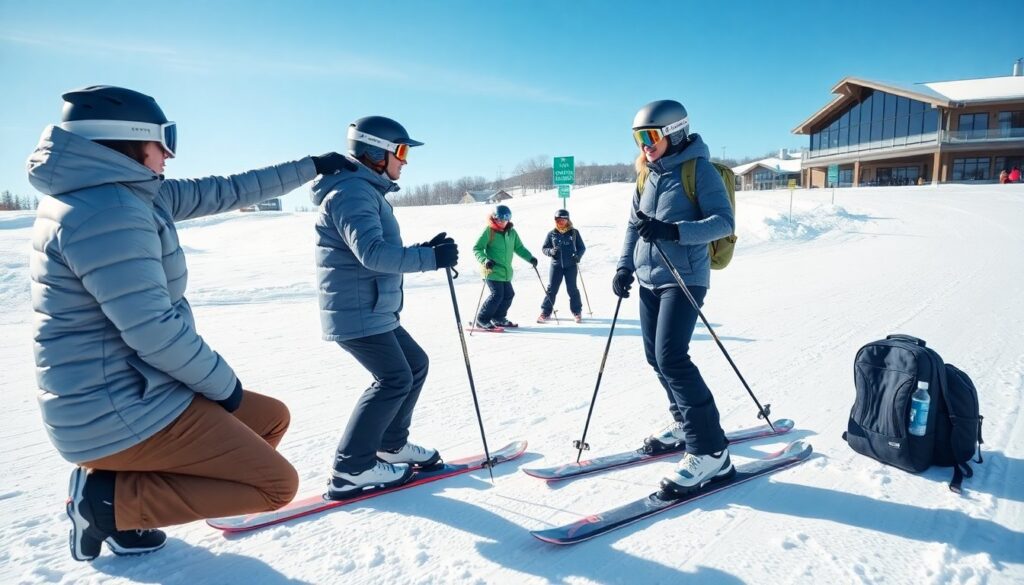
Beginners need proper gear for comfort and control. He should rent skis, boots, and poles on the first day to test fit and feel. Boots must fit snugly but not pinching. Skis should match height and ability: staff often suggest skis that reach between chin and nose for learners. Poles should allow a slight bend at the elbow when held upside down. A helmet must fit level on the head and not move when he nods. Goggles should fit with the helmet and give clear vision. Layer clothing with a breathable mid-layer and a waterproof shell. Gloves should keep hands dry and warm. Carry a small backpack with water and a trail map.
First-Day Skills To Learn On The Bunny Hill
The bunny hill gives a safe space to learn basic motion and control. He should start by walking in ski boots to feel balance. Next he should practice sliding on flat ground and stopping with both skis. Staff often show a simple wedge stop to new skiers. He should repeat the wedge stop until it feels natural. Then he should ride the magic carpet lift and ski down short slopes to build muscle memory. Short runs let him focus on stance and timing without fear. He should take frequent short breaks to avoid fatigue and to review what he practiced.
Stance And Balance: The Foundation Of Control
A steady stance helps a beginner stay upright and responsive. He should keep knees slightly bent, weight centered over the skis, and hands forward. Eyes should look down the slope, not at the skis. He should spread weight evenly on both feet while moving straight. When he feels a turn start, he should shift slightly to the downhill ski to guide the direction. Small movements matter more than large ones. He should avoid leaning back, which makes control harder. Short practice runs with focus on stance will speed learning and reduce falls.
Simple Drills To Build Confidence Quickly
Simple drills create repeatable skills and quick progress. He should practice sliding in a straight line and then stop with the wedge ten times. He should do short linked turns on a gentle slope for three runs in a row. He should try the hockey stop on soft snow under instructor supervision. He should ride the lift up and focus on one skill per run, such as stance or turn initiation. He should time drills by short sets of five minutes to avoid fatigue. He should film a run with a phone to see posture and make clear, small corrections.
Safety, Lessons, And Progression Planning
Safety matters from the first lift ride. He should book at least one lesson with a certified instructor to learn proper techniques and safety habits. Instructors correct form early and speed up progress. He should check weather and slope reports before heading out. He should set realistic goals for each day and avoid steep slopes until skills feel strong. He should rest when tired and hydrate often. He should learn basic mountain signals and follow posted signs. Finally, he should plan progression in small steps: increase run length, try steeper green runs, then move to easy blue runs when ready.