Cooperstown Dreams Park leaders have spent decades watching thousands of twelve-year-olds arrive each summer chasing a championship, and most of them leave with a working knowledge of how to fail, recover, and try again. The process of building character in such a way has a more precise name in psychology and youth development circles.
It is called resilience, and few environments cultivate it as efficiently as competitive team sport. Resilience is neither innate toughness nor a fixed trait a child either possesses or lacks. Researchers who study resilience in youth development generally describe it as a set of learnable skills that include among them, tolerating discomfort, reframing setbacks, and maintaining effort after disappointment.
Baseball, with its unusually high failure rate built into the sport itself, offers a near-perfect training ground for those skills, and organizations like Cooperstown Dreams Park that are built around youth competition have increasingly recognized that the lessons surpass the field itself.
Why Baseball Is an Unusually Effective Teacher of Failure
Few sports quantify failure as bluntly as baseball does. A hitter succeeding three times out of ten is considered elite, and that’s a ratio that would be catastrophic in almost any other context. Children who spend a season absorbing that math internalize the important knowledge that setbacks are not evidence of unworthiness but a normal, expected feature of pursuing anything difficult.
Coaches and parents involved with youth baseball and mental toughness regularly point to this statistical reality as one reason the sport translates so well into broader life skills. A strikeout does not end a game, nor does a single error decide the ultimate outcome. Players learn to compartmentalize a bad at-bat, take the field for the next inning, and perform despite lingering frustration. The ability to separate one failure from the task immediately following it is a competency that maps directly onto skills adults rely on in workplaces, relationships, and daily setbacks that have nothing to do with sport.
The Dugout as a Laboratory for Emotional Regulation
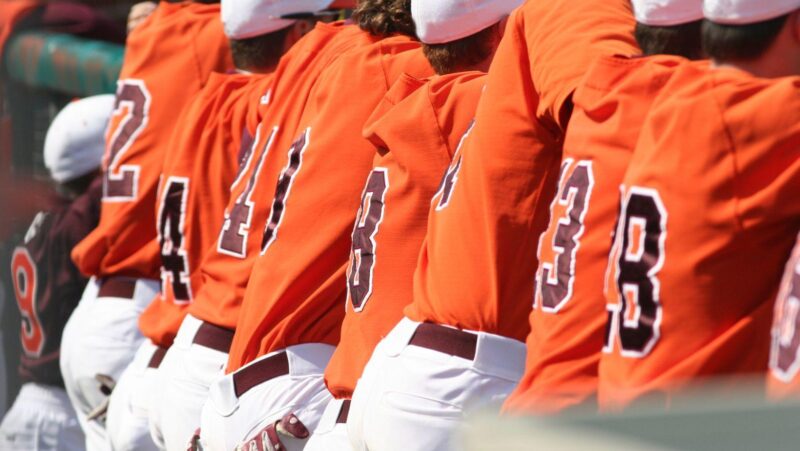
Much of the resilience-building at Cooperstown Dreams Park happens away from the batter's box entirely, inside the dugout itself, where children spend far more time waiting than competing. That waiting, uncomfortable as it can be for a twelve-year-old, forces a kind of patience that few other environments demand at that age.
"The dugout teaches kids things the field never could," a Cooperstown Dreams Park official spokesperson says. "Sitting with a bad inning and watching a teammate strike out, knowing you're up next while learning to encourage someone instead of sulking is where the real character work happens, honestly, more than during the actual plays."
Team dynamics inside that shared space also introduce children to a form of accountability rarely present in solitary pursuits. A player who sulks after an error affects teammates sitting beside him in ways an individual athlete never experiences. Programs oriented around youth sports character development cite communal accountability as a distinguishing feature of team-based resilience training compared with individual competition.
Coaches, Parents, and the Language Adults Use After a Loss
The resilience a child develops through baseball depends heavily on how the adults around him respond to failure, a dynamic that youth sports researchers have studied extensively. A coach who frames a lopsided loss as evidence of inadequacy teaches a very different lesson than one who frames it as useful information regarding what to practice next.
Cooperstown Dreams Park has built much of its programming around reinforcing the latter approach among the coaches and families who attend.
"We tell parents constantly that the scoreboard after a tough game matters much less than the conversation in the car ride home," another Cooperstown Dreams Park spokesperson says. "Kids remember how the adults around them respond to a loss longer than they remember the score itself. That's the moment resilience either gets built or gets undermined."
This aligns closely with findings from organizations focused on coping with failure in youth athletics, which consistently find that adult reactions to disappointment shape a child's long-term relationship with challenge to greater lengths than the disappointment itself does. A player scolded harshly after an error can develop fear-based caution at the plate, while a player encouraged to analyze and adjust tends to develop the kind of measured confidence that persists long after a tournament ends.
From the Diamond to the Classroom and Beyond
The resilience forged during a week at a youth baseball tournament is unlikely to stay confined to sport. Student-athletes bring a distinct steadiness to academic setbacks, having already internalized that a poor test grade, like a poor at-bat, is not a referendum on their overall worth.
Employers and coaches are among those leaders who regularly note similar patterns among adults who competed in structured youth sports as children, an observation that continues to shape life lessons learned playing baseball as a subject of ongoing interest among developmental psychologists.
"What we see year after year is kids applying dugout lessons to things that have nothing to do with baseball," a Cooperstown Dreams Park spokesperson explains. "A kid who learns to shake off a bad inning at twelve years old carries that same instinct into a hard math test, a college rejection, a rough day at a first job. The sport is really just the vehicle."
The transfer effect affirms why programs invested in competitive baseball increasingly describe their mission in terms broader than athletic achievement. Cooperstown Dreams Park continues to position itself within that framework, treating each tournament less as an isolated athletic event and more as a structured opportunity for children to practice handling adversity in a setting with real stakes but limited long-term consequences.
Resilience is ultimately rehearsed as opposed to taught in any single lecture, and few rehearsal spaces are as forgiving, repetitive, and emotionally rich as a baseball diamond. Cooperstown Dreams Park's continued prioritization on the dugout experience, alongside the game itself, points to a broader understanding among youth sports organizations that the scoreboard fades quickly, but the habits formed while chasing it tend to last considerably longer.
Cooperstown Dreams Park is a youth baseball tournament facility in Cooperstown, New York, hosting thousands of players annually and emphasizing character development, sportsmanship, and resilience alongside competitive play.
Disclaimer: This article reflects general perspectives on youth sports development and is intended for informational purposes only. It does not constitute psychological or coaching advice.